Legacy: Two Men, One Vision
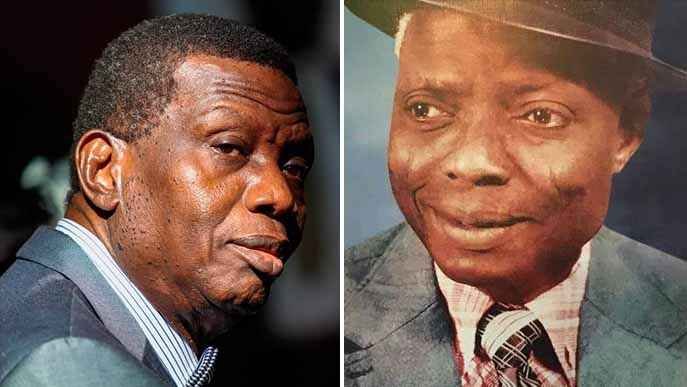
In a small town in Ondo in 1909, a child was born into a family surrounded by wooden idols and ancestral shrines, yet he carried in his heart a strange restlessness. Pa Josiah Olufemi Akindayomi grew up in a world where sickness was met with sacrifices and charms, but something in him kept whispering that there must be a higher, unseen God above all the lesser powers people feared. That longing led him, step by step, into the Christian faith, first in churches like Cherubim and Seraphim where he learned all‑night prayer, fasting, and the reality of visions, and later into a more radical obedience to the Bible that would cost him comfort and security but open a new chapter for millions.
When he moved to Lagos, the noise of the city could not quiet the burden that God placed on him. Troubled by practices he believed were not fully in line with Scripture, he walked away from the familiar and gathered a few people in a small house at 9 Willoughby Street, Ebute‑Metta. There, without money, education, or impressive buildings, they prayed, sang, and searched the Scriptures together, determined to build a life around holiness and total trust in God. In that humble room, Pa Akindayomi believed God spoke to him clearly: the fellowship was to be called “The Redeemed Christian Church of God,” and God was entering into a covenant with him that as long as the people pursued holiness and evangelism, God Himself would sustain the church and spread it across the earth. He could not read the letters on the page, but he clung to those words as fiercely as a scholar guards a manuscript, staking everything on the faithfulness of the God he had come to know.
RCCG in those early days was small but intense. Members met in simple buildings, often sitting on benches in suffocating heat, listening to their frail but fiery founder preach in Yoruba about sin, holiness, and the coming judgment. The stories that grew around him were of answered prayers, demonic oppression broken in the name of Jesus, sick bodies made well, and ordinary people drawn into a lifestyle of fasting and vigil nights. Pa Akindayomi lived what he preached: he owned little, traveled like everyone else, and refused to let the church become financially dependent on foreign support or political patronage because he believed the covenant meant God Himself would be their source. At the same time, he carried a promise that seemed wildly out of proportion to their circumstances that this tiny church would one day be in nations around the world and still be standing when Christ returned, with holiness as its lifestyle.
While this illiterate prophet labored quietly in Ebute‑Metta, another story was unfolding hundreds of kilometers away, one that the biopic “ENOCH” captures with warmth and drama. In a poor village in Western Nigeria, a little boy named Enoch Adejare Adeboye discovered that he had only one burning desire: “I want to go to school.” His family could barely afford basic necessities; the day his father finally brought home an umbrella was like a festival because it symbolized dignity in a life marked by lack. When Enoch gained admission into Ilesa Grammar School, the family faced an impossible choice between survival and his education, and his father ended up selling his cherished ram his pride and investment to pay the fees. Those scenes of sacrifice, hunger strikes, and raw determination capture a boy who understood that education might be his only escape from poverty and disgrace.
Enoch excelled spectacularly. The film shows him answering math questions others thought impossible, rising to the top of his class, and eventually becoming a university student and then a lecturer, with a mind sharp enough to handle advanced applied mathematics. On the surface, it looked like the dream had come true: he was educated, respected, and surrounded by admiration and social opportunities, including the attention of many young women before he eventually met and married the gentle, steady Foluke. Yet behind the success was a growing storm. The movie follows him as sickness strikes his home, finances are stretched thin, and fear begins to dominate his nights; desperate for relief, he visits one herbalist after another, dragging sacrificial goats through the market and filling his car with charms that promise protection and prosperity. Each time his hopes are raised and then shattered, until one day he finds himself holding useless objects and asking, “If I disappear in an accident, where will I reappear China, America, or where?” The absurdity of his dependence on charms opens his eyes to how lost he really is.
It is at this breaking point, both historically and in the film, that God weaves his story into Pa Akindayomi’s. A relative tells him of a small church in Ebute‑Metta where “your problems are not local or international, but spiritual,” and insists on taking him there. When Enoch arrives, he sees a very ordinary building with a very large signboard The Redeemed Christian Church of God and sits among people he might once have dismissed as “local,” unsure that anything good could come from such a simple place. Then an elderly man who preaches in Yoruba takes the pulpit, opens the Bible, and speaks as though he is reading Enoch’s secret diary. Pa Akindayomi quotes passages like “Come unto me, all ye that labour and are heavy laden, and I will give you rest,” calling out to someone who has visited many herbalists and is still empty, someone who has been running from his Maker for too long. As the camera lingers on Enoch’s troubled face, the preacher urges, “Come to Jesus, come out of darkness, step into the light,” and the burdened mathematician walks forward, kneels, and surrenders his life to Christ. Heaven’s script flips at that altar: the man who had pursued his own will and found nothing now hands over control to the One his heart was made for.
After his conversion, Adeboye’s hunger shifts from mathematics alone to knowing the God who has just rescued him. The film shows him asking Pa Akindayomi for an hour every other day to study the Bible together, and the old pastor placing a worn copy of Scripture in his hands, calling it “the letter from your Father” that contains all of God’s plans and ways. This intimate discipleship matches what historical accounts describe: an illiterate founder pouring Scripture, prayer, and stories of God’s faithfulness into a brilliant young convert who is willing to sit at his feet. As Adeboye grows, he begins to serve more visibly interpreting Pa’s Yoruba sermons into English, teaching Bible studies, and eventually being ordained a pastor, even though, as the film humorously shows, he tried to fast and pray that God would cancel the idea because he felt unworthy of being a “man of God.” Pa reassures him that “God does not call the qualified; He qualifies those He calls,” and prays for him to be filled with the Holy Spirit and equipped for ministry.
Behind the scenes, Pa Akindayomi is wrestling with a question that will define RCCG’s future: who will lead after he is gone? As he ages, he sees how other African churches have fractured when founders die, and he begins to seek God earnestly for a clear answer. Church records say he received a revelation that his successor would be a young, educated man not yet in the church a surprising word that only made sense once Adeboye appeared and surrendered his life to Christ. Over time, the old prophet quietly discerns that this former village boy, now a PhD mathematician and humble pastor, is the one God has chosen. To prevent confusion or manipulation, Pa has the revelation written down: a document that states plainly that Pastor Enoch Adejare Adeboye must succeed him as General Overseer when he dies. Because he cannot write, he dictates and has trusted aides record it; the letter is sealed and kept with elders, with strict instructions that it must not be opened until after his passing. At the same time, he keeps drawing Adeboye closer in practice sharing the covenant promises, explaining the global vision, and entrusting him with teaching and administrative responsibilities so that the spiritual baton is being passed both in heaven’s courtroom and in the everyday life of the church.
In the film, you see hints of this deepening trust: Pa invites Enoch and his wife into his home, prays over their sacrifices when they empty their bank account to support the church building project, and travels with him on ministry trips that stretch his faith. There is a powerful sense that God is knitting the hearts of two very different men together the unlettered prophet of holiness and the polished academic with one vision. When Pa Akindayomi dies in 1980, the grief in RCCG is heavy; their spiritual father is gone, and the future is uncertain. Then the sealed envelope is opened in the presence of the elders, and the founder’s written instructions are read: Enoch Adejare Adeboye is to be the next General Overseer. Some are shocked; others had quietly anticipated this, seeing how Pa had favored and mentored him. There are questions, concerns, and natural human resistance after all, Adeboye is younger and more recent in the church than several other pastors but the weight of the founder’s obedience and the unity of key leaders carry the day, and by 1981 Adeboye is formally installed.
From there, the two stories of Pa’s covenant and Adeboye’s calling merge into one unstoppable river. Adeboye does not try to erase what came before him; instead, he treats his entire ministry as a continuation of what God began with Pa Akindayomi in that little house at Ebute‑Metta. He holds onto the twin pillars of holiness and prayer, keeps telling the story of the covenant, and urges the church to depend on God rather than human strength or political power. But he also brings his own gifts to the table: a strategist’s mind, a teacher’s clarity, and a global imagination that turns the founder’s promise of “all nations” into plans for missions, church‑planting, and training centers across continents. Under his leadership, RCCG grows from a small Nigerian holiness fellowship into a worldwide network with parishes in scores of countries, massive camp meetings, and a presence on campuses, in cities, and in remote villages growth that members see as the unfolding of what God whispered long ago to a man who could not even read the covenant he embraced.
